
Can you sue if you slipped on ice or snow on commercial property? Yes, you may be able to sue if a business owner or property manager failed to take reasonable steps to address a dangerous icy or snowy condition and that failure caused your fall.
A fall alone does not automatically make the business legally responsible. The facts matter a great deal, including where you fell, how long the ice or snow was present, and whether the area was being maintained.
A slip and fall accident lawyer from Sweet James can review the details of your case and explain what legal options may be available.
When Can a Business Be Liable for a Slip on Ice or Snow?
A business may be liable when it failed to use reasonable care to keep the property reasonably safe for customers and other lawful visitors. That can include failing to remove ice or snow within a reasonable time, failing to salt or sand a walkway, or failing to post warnings when a hazard could not be fixed right away.
Liability usually depends on what the owner knew and what steps were taken before the fall.
In many cases, the issue is whether the condition existed long enough that the business should have discovered it and addressed it. A freshly formed patch of ice may be treated differently than snow that was left untreated for hours or days.
You may need evidence showing the hazard was foreseeable and preventable. That can come from maintenance logs, weather reports, surveillance footage, witness statements, or photos from the scene. The lawyers from Sweet James can help you get these for your case.
What Must You Prove in an Ice or Snow Slip and Fall Claim?
You generally must show that a dangerous condition existed, the property owner or manager knew or should have known about it, and the condition caused your injuries. You also need to show that you suffered actual harm, such as medical bills, lost income, or pain after the fall. A claim for slipping on ice or snow on commercial property often depends on this chain of proof.
In many premises liability cases, notice is a major issue. Actual notice means the business knew about the icy condition, while constructive notice means it existed long enough that the business should have found it through reasonable inspections. Either type of notice can affect whether the business may be held responsible.
Common evidence Sweet James uses to support these claims includes the following:
- Photos of the ice, snow, slush, or lack of warning signs to show the condition at the time of the fall.
- Surveillance footage
- Witness statements
- Medical records
- Incident reports
- Weather records
Can You Still Recover Money If Warning Signs Were Posted?
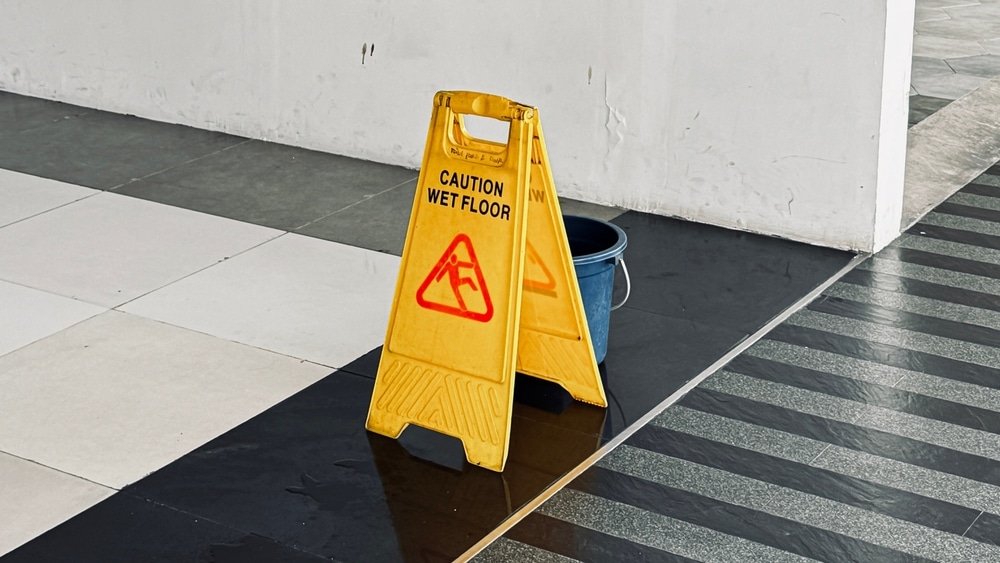
Possibly, because a warning sign does not always excuse a dangerous condition. A sign may help a business show that it tried to warn visitors, but it does not automatically end the claim. If the hazard remained unreasonably dangerous, the property owner may still face liability.
The timing and placement of the warning can matter. A small sign placed far from the icy area may do little to protect visitors. The same may be true if the hazard was in a place where customers had to walk to enter or exit the business.
Your own actions may also be examined. If the business argues that the condition was open and obvious, or that you ignored a clear warning, that can affect how fault is assigned and whether damages are reduced. Sweet James can help you push back against claims that you were the person at fault.
What If You Were Partly at Fault for the Fall?
You may still recover damages in some cases even if you were partly at fault. Many states apply comparative fault rules, which reduce compensation based on your share of responsibility. That means the defense may argue you were distracted, wore unsafe footwear, or failed to avoid an obvious hazard.
Even when the business raises those arguments, that does not mean your case is over. A claim can still succeed if the business’s share of fault played a meaningful role in causing the accident. The lawyers at Sweet James can dig into the details to work to reduce your level of fault.
Several facts may affect whether partial fault becomes an issue:
- Whether the lighting in the area made the ice hard to see.
- Whether snow or slush covered the icy patch.
- Whether you had to use that path to reach the entrance or your vehicle.
- Whether handrails, mats, or salt were missing from the area.
- Whether the business had a safer alternate route available.
- Whether your footwear and movements were reasonable for the conditions.
What Damages Can Be Recovered After Slipping on Ice or Snow on Commercial Property?
You may be able to recover compensation for financial losses and personal harm tied to the fall. That can include medical expenses, future treatment costs, lost wages, reduced earning ability, and pain and suffering. The value of a commercial property slip and fall claim often depends on the seriousness of the injury and how long it affects your daily life.
Some injuries from icy falls heal within weeks, while others lead to lasting problems. Broken bones, head injuries, back injuries, and shoulder damage can require extended treatment, time away from work, or ongoing physical limitations. Sweet James can help you get compensation for all of the medical costs linked to your accident.
Property damage may also be part of the claim in some cases. If personal items like glasses or a phone were damaged in the fall, those losses may be included along with injury-related damages.
Talk to Sweet James About a Commercial Property Slip and Fall Claim
If you slipped on ice or snow on commercial property, your rights may depend on whether the owner had notice of the hazard and failed to take reasonable steps to address it. These claims often require a close review of the property condition, weather history, maintenance efforts, and the medical impact of the fall.
A slip and fall accident lawyer can help you assess whether you may have a valid claim and what evidence may support it. Sweet James can review the facts of your fall, explain the legal issues that may apply, and discuss possible next steps. If you want to learn more about suing for a slip on ice or snow on commercial property, contact Sweet James today.