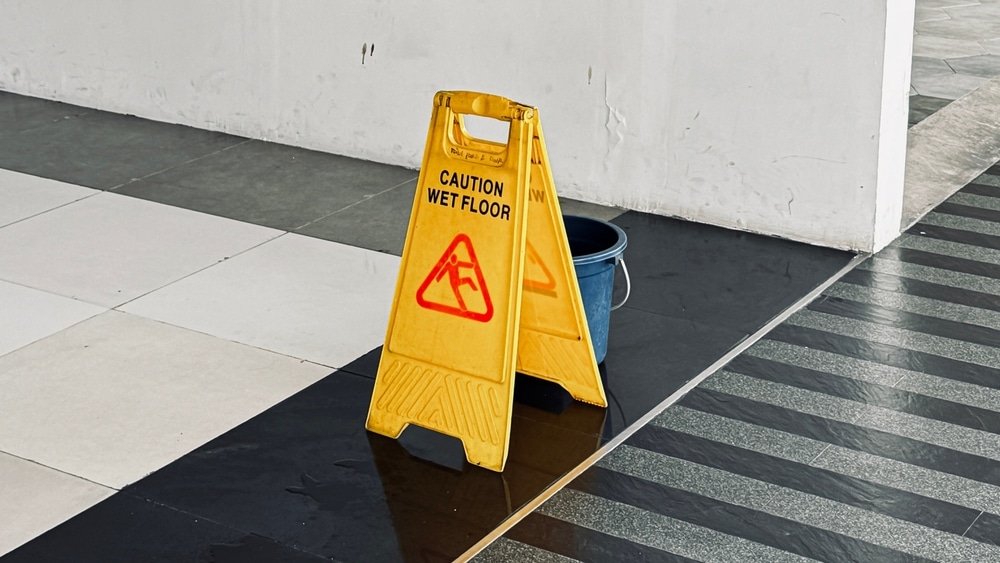
Arizona slip and fall laws allow an injured person to seek compensation when a property owner’s negligence causes a fall and resulting losses. Sweet James has an experienced trial team that can evaluate disputed premises liability claims.
Our Arizona slip and fall lawyers can review the hazard, the owner’s notice, comparative fault, damages, and filing deadlines.
Understanding Premises Liability in Arizona
Premises liability generally concerns a person or business responsible for property and the safety of people who enter it. The duty owed can depend on why the visitor was there and what the property controller knew or should have known.
Arizona courts have traditionally considered visitor status when defining that duty. The facts may differ for a customer invited into a store, a social guest, or a trespasser.
Important concepts include:
- Duty of care: A business owner who notices a cracked tile and does nothing about it isn’t acting the way the law expects a property controller to act.
- Invitees: A customer walking the aisles gets more protection than almost anyone else who sets foot on that property.
- Licensees: A social guest has permission to be there, but the owner’s duty is narrower, just warning about hazards the guest wouldn’t notice on their own.
- Trespassers: Duties are limited here, though a landowner still can’t set a trap, and a child on the property changes things.
- Control of the property: An owner, tenant, manager, contractor, or business may be responsible depending on who controlled the area.
- Reasonable inspections: Stores and other businesses may need inspection practices suited to the risks created by their operations.
These rules are fact-sensitive. A spill in a grocery aisle, broken stair, loose carpet, poorly lit walkway, and cracked parking lot may require different evidence.
A legal investigation can examine ownership and management records to identify who controlled the hazardous area and who may be legally responsible.
Call or text (800) 900-0000 or complete a Free Case Evaluation form
Proving Negligence in an Arizona Slip and Fall Case
An injury does not automatically make the property owner liable. The claimant generally must show a duty, an unreasonable failure to address a hazard, causation, and damages. So how hard is it to win premises liability cases? Talking to a lawyer can help you understand the answer before committing.
Useful proof can include:
- Photographs or video of the hazard and surrounding area
- Surveillance footage showing how long the condition existed
- An incident report and employee statements
- Witness names and contact information
- Inspection, cleaning, repair, and maintenance records
- Medical records connecting the fall to the injuries
Ask that video be preserved as soon as possible because systems may overwrite it. Avoid guessing about how long the hazard existed if you did not observe it beforehand.
When a case comes down to how an injury happened, Sweet James brings in whoever can actually make sense of it, whether an expert on flooring, a doctor who can explain the causation question, or whoever the dispute actually calls for.
Call or text (800) 900-0000 or complete a Free Case Evaluation form
Arizona’s Comparative Negligence Rule
Say a jury finds you 20% responsible for not watching where you stepped. In Arizona, you still collect 80% of what you’re owed. You just can’t be 100% at fault and still recover something.
An insurer’s favorite move is claiming the hazard was obvious, there was a sign, or you weren’t paying attention. None of that automatically wins the case for them. The rule touches a claim in a few different spots:
- Multiple defendants: A store might lease the floor from one company and hire a cleaning crew from another. One fall, three possible names on the claim.
- Partial fault: Found 20% responsible? You still collect 80%, not nothing.
- Footwear and attention: An insurer who finds out you were texting will use it. Same with the wrong shoes for a wet floor.
- Warnings: A sign existing doesn’t mean it was placed where anyone could actually see it in time.
- Open and obvious conditions: A hazard being visible doesn’t automatically let the property owner off the hook.
- Intentional conduct: Causing your own injury on purpose puts you under a completely different set of rules.
An adjuster’s allegation isn’t evidence. The scene, surveillance footage, witness accounts, and the inspection history settle comparative fault, not what someone claims over the phone.
Call or text (800) 900-0000 or complete a Free Case Evaluation form
Crucial Deadlines: The Arizona Statute of Limitations
A crucial Arizona slip and fall law to know is how long you have to file a lawsuit. The most common deadline under the Arizona statute of limitations, as outlined in Arizona Revised Statutes 12-542, is two years.
However, this may not be the same period for everyone. A child’s clock might not start until adulthood. And if no one caught the injury right away, the real question becomes when you reasonably should have known about it, not just when you fell.
Claims involving an Arizona public entity or public employee can have much shorter requirements. A notice of claim is generally required within 180 days, and a lawsuit may be subject to a one-year filing period. The notice must also meet specific content and service rules.
Preserving Arizona Slip and Fall Evidence
Keep photographs, video, clothing, shoes, witness details, medical records, employment information, and insurance correspondence together. Ask a lawyer which deadline applies to each potential defendant and whether any notice must be served before a lawsuit is filed.
Sweet James can identify potential defendants and evaluate the applicable deadlines based on the available facts.
Call or text (800) 900-0000 or complete a Free Case Evaluation form
Common Hazards, Injuries, and Recoverable Losses
A wet floor sat unmarked for an hour. Someone fell on it. That’s most of what these cases actually come down to.
A fracture is obvious right away. A concussion isn’t always obvious; sometimes it’s a headache that won’t quit three days later. Either way, don’t wait it out. Get checked, and tell the doctor exactly when and how the fall happened.
A claim may seek compensation for losses such as:
- Emergency care, follow-up treatment, therapy, and medication
- Future medical care supported by qualified evidence
- Lost wages and reduced earning ability
- Pain, disability, and not being able to do what you used to do
- Help needed at home while recovering
- Damaged personal property
- Funeral expenses and other wrongful death losses when applicable
Save bills, work notes, photographs, and a plain account of what you can’t do anymore that you used to. Sweet James can organize those records into a supported damages presentation.
An Arizona Slip and Fall Lawyer Can Answer Your Questions
Arizona slip and fall laws involve more than showing that a fall occurred. The property controller’s duty, notice of the hazard, comparative fault, medical causation, damages, and deadlines all require evidence.
Sweet James can manage insurer communication and paperwork while investigating the property and preserving available proof.
You can also review our results to see examples of past outcomes. Yet, to find answers about your specific case, contact Sweet James and get a free, confidential case review.
Call or text (800) 900-0000 or complete a Free Case Evaluation form