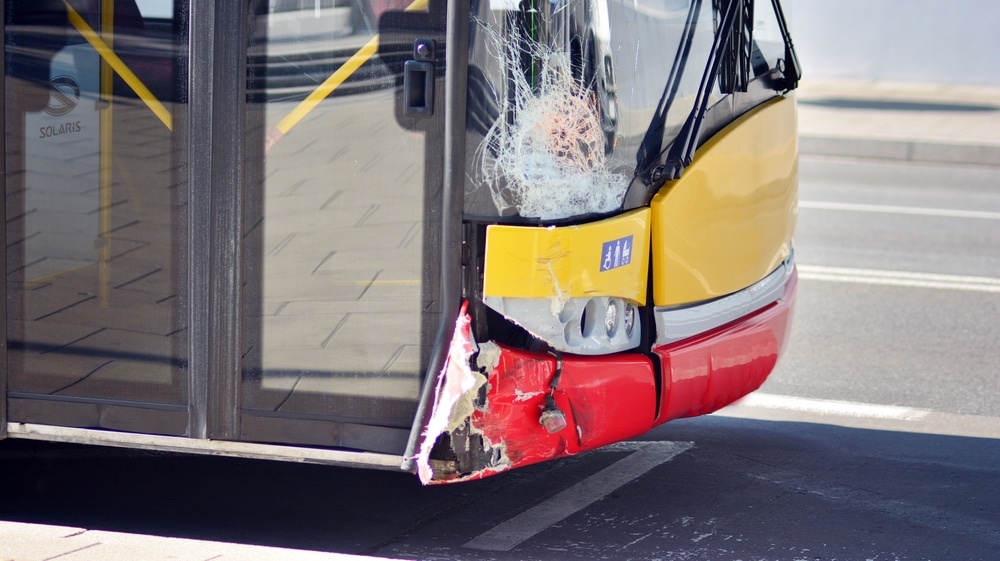
The role of negligence in a bus accident lawsuit is to establish whether a party failed to meet a legal duty of care and caused your injuries. Proving that connection can provide a basis for recovering medical expenses, lost income, and other damages.
Responsibility may rest with a driver, a transportation company, a maintenance provider, a public agency, or multiple parties. A bus accident lawyer can evaluate their conduct and identify the evidence needed to support your claim.
How Does Negligence Affect a Bus Accident Lawsuit?
Negligence provides the framework for deciding whether someone failed to exercise the care legally required under the circumstances. A collision or injury alone does not establish that the bus driver or operator was negligent.
The applicable duty depends on state law and the relationship between the parties. For example, California requires carriers transporting passengers for payment to exercise a heightened degree of care toward those passengers. That passenger standard does not automatically apply to claims by other motorists or pedestrians.
We determine the applicable duty before assessing whether unsafe driving, inadequate maintenance, or another failure caused your harm.
What Must Be Proven to Show Negligence in a Bus Accident Case?
To establish negligence in a bus accident claim, you generally need evidence supporting four elements:
- Duty: The defendant owed you a legal duty of care.
- Breach: The defendant failed to meet that duty through an act or omission.
- Causation: The failure was a factual and legally recognized cause of your injuries.
- Damages: You suffered compensable harm, such as medical expenses, lost earnings, or physical pain.
For example, a maintenance record showing overdue brake repairs may support an allegation of breach. You would still need evidence connecting the brake condition to the collision and your injuries.
In an ordinary civil negligence claim, these elements generally must be proven by a preponderance of the evidence, meaning more likely than not. The precise instructions and required proof depend on the jurisdiction and claim.
Who Can Be Negligent in a Bus Accident Lawsuit?
More than one party may contribute to a collision. We examine the driver’s conduct alongside the operator’s practices, maintenance work, and actions of other road users.
Can a Bus Driver Be Found Negligent?
Yes. Driver negligence may involve speeding, distraction, following too closely, failing to yield, or driving while too fatigued to operate safely.
The circumstances still require investigation. A sudden stop, for example, may be a reasonable response to an unexpected hazard. We examine why the driver braked and whether earlier conduct, such as following too closely, created the danger.
Can the Bus Company or Employer Be Liable?
An employer may be legally responsible for an employee’s negligent driving performed in the course of assigned work. This is called vicarious liability and does not necessarily require proof that the employer independently acted carelessly.
The company may also face claims based on its own conduct, including:
- Hiring or retaining a driver it knew or should have known posed a relevant safety risk.
- Providing inadequate training that contributed to the collision.
- Ignoring necessary repairs or inspections.
- Imposing schedules that encouraged unsafe driving.
- Failing to address known violations of safety rules.
Each allegation requires evidence linking the company’s failure to your injuries. An employment relationship or policy violation alone does not establish every element of liability.
Can Other Parties Share Responsibility?
A maintenance contractor may be liable for faulty work, while another motorist may have caused the bus to collide with your vehicle. Public agencies may also face claims where state law permits them.
A defective component could support a product liability claim under rules that differ from those governing ordinary negligence. We assess the available legal grounds rather than assuming every defendant must be sued on the same theory.
What Evidence Helps Prove Negligence After a Bus Crash?
Evidence must show both what happened and why the defendant’s conduct was legally responsible for your harm. Useful records may include:
- Scene photographs and available surveillance or onboard footage.
- Witness accounts and traffic collision reports.
- Driver schedules, dispatch communications, and vehicle data.
- Maintenance records, inspection reports, and repair histories.
- Medical records connecting your injuries to the collision.
A police report can provide leads, but its conclusions do not automatically determine civil liability. We compare the report with physical evidence and other accounts.
Preserving records early helps prevent gaps caused by overwritten footage, vehicle repairs, or missing documents. Technical analysis may also be needed to explain speed, stopping distance, or mechanical failure.
How Can Negligence Affect Compensation?
Proving negligence in a bus accident lawsuit can establish entitlement to compensation, but it does not, by itself, determine the amount. You must also document the losses caused by the collision.
Recoverable damages may include treatment expenses, future care, lost income, reduced earning capacity, and pain and suffering. A serious injury may require medical and financial evidence addressing lasting limitations.
The degree of carelessness does not automatically increase ordinary compensatory damages. Shared fault, statutory limits, and the rules governing defendants’ responsibility may affect recovery.
Why Do Bus Accident Negligence Cases Require Additional Investigation?
Bus operations may involve separate owners, employers, contractors, and public agencies. Establishing who controlled the driver or maintained the vehicle can require contracts and records that are not available at the scene.
Government claims present additional legal questions. Evidence of carelessness may be insufficient unless the claim also satisfies the state’s requirements for public-entity liability, including applicable immunity rules.
Multiple injured people and disputed insurance coverage can further affect the case. Those issues are separate from proving how the collision occurred, but they may influence the available recovery.
When Should You Speak With a Lawyer About Negligence?
Seek legal advice early if you were injured, particularly when the operator denies responsibility or the cause remains uncertain. You do not need to prove fault before consulting an attorney.
We can assess the evidence of negligence following a bus accident, identify potential defendants, and determine which records must be preserved. We also check filing requirements while the investigation proceeds.
Uncertainty about responsibility generally does not suspend legal deadlines. Claims involving public agencies may require notice before an ordinary injury lawsuit would be due.
Talk to Sweet James About Negligence in Your Bus Accident Case
A driver’s explanation or an insurer’s denial is not the final determination of fault. Sweet James can examine the evidence and explain whether the conduct involved supports a negligence claim.
We focus exclusively on accident and personal injury cases. Founding attorney James Bergener’s prior work representing insurance carriers provides insight into how injury claims are evaluated and defended.
Contact us for a free consultation about the collision and any disputed facts. We will discuss the proof your claim may require and how we can pursue it. You pay no fees or costs until we win.