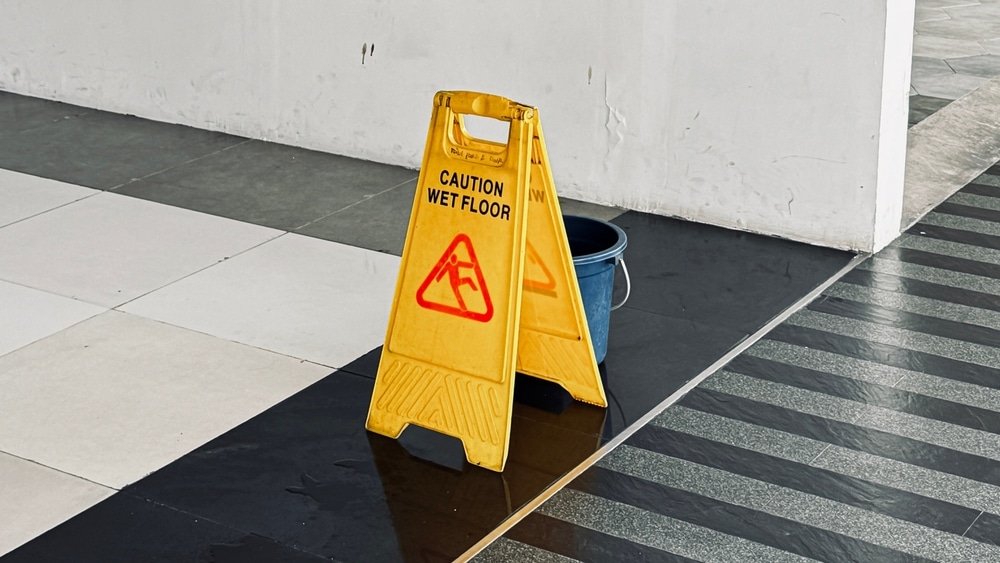

Slip and fall cases are hard to win because you have to prove the property owner was careless, not just that you fell and got hurt. Falling on someone’s property isn’t enough on its own. You have to show the owner knew about a hazard, or should have, and did nothing to fix it.
On top of that, these cases come with built-in challenges. Evidence like a spill or a broken step disappears fast, and property owners often argue you weren’t watching where you were going. That makes strong proof and quick action so important.
A slip and fall lawyer from Sweet James can look at how you fell, tell you honestly whether you have a case, and start protecting your evidence right away. The free consultation costs you nothing, so there’s no risk in asking.
Why Slip and Fall Cases are Hard to Win
Slip and fall claims sound simple, but they’re some of the toughest injury cases to prove. Here’s why these cases can be an uphill battle.
The Evidence Disappears Quickly
A spill gets mopped up, a broken railing gets repaired, and security footage gets erased—often within days. Once the hazard is gone, it’s your word against the owner’s, which is exactly why acting fast matters so much.
Property Owners Blame the Victim
Insurers often argue that you were distracted, wearing the wrong shoes, or ignoring a warning sign. Shifting blame onto you is one of the most common tactics used to lower or deny a claim.
Proving the Owner Knew Is Difficult
It’s not enough that a hazard existed. You have to show the owner knew or should have known about it and had a reasonable chance to fix it. That link is often the hardest part to prove.
The Injuries Can Be Doubted
Since many fall injuries, like back or head injuries, aren’t visible, insurers may claim you’re exaggerating or that the injury came from something else.
These challenges can make a claim more difficult, but they don’t necessarily prevent you from recovering compensation.
What Do You Have to Prove in a Slip and Fall Claim?
To win, you generally have to prove four things. Miss one, and the whole claim can fall apart.
First, the property owner owed you a duty to keep the space reasonably safe. Second, a dangerous condition existed, like a wet floor or broken step. Third, the owner was careless—they knew or should have known about the hazard and failed to fix it or warn you. Fourth, that hazard caused your injury and real losses, like medical bills or lost wages.
Understanding these four parts is the key to seeing why slip and fall cases are hard to win. Each one has to be backed by evidence, and the property owner’s insurance company will fight you on every point.
What Evidence Helps Support a Slip and Fall Case?
The stronger your proof, the harder it is for an insurer to blame you or deny your claim. If you can, gather as much of the following as possible:
- Photos and video of the exact hazard that caused your fall
- Surveillance footage from the store or building
- Incident reports filed with the business or landlord
- Witness names and statements from anyone who saw it happen
- Medical records tying your injuries directly to the fall
- Cleaning and maintenance logs showing the owner ignored the problem
- The shoes and clothing you were wearing that day
The trouble is that much of this evidence vanishes quickly. A lawyer can send a formal letter demanding a business preserve footage before it’s deleted, which can make or break your case.
Did the Property Owner Know About the Danger?
One of the biggest questions in any slip and fall case is whether the property owner knew about the hazard. This is called “notice,” and it often decides whether you win or lose. There are two kinds.
- Actual notice means the owner truly knew about the danger—for example, an employee saw the spill.
- Constructive notice means the hazard was there long enough that the owner should have found and fixed it, like a puddle that sat in an aisle for hours. If a danger appeared seconds before you fell, the owner may not be responsible because they had no fair chance to act.
Proving how long the hazard was there is often what separates a winning claim from a losing one.
Can You Still Recover If You Were Partly at Fault?
Often, yes. Many people assume that if they were even a little careless, they lose the right to recover anything. In many states, that’s simply not the case.
Under a rule called comparative negligence, your payout is reduced by your share of the blame. If you were 20% at fault and your damages were $10,000, you could still recover $8,000. Some states let you recover only if you were 50% or less at fault, while others allow recovery no matter your share. Because the rules differ by state, being partly to blame doesn’t automatically end your slip and fall claim.
Insurance companies often overstate your share of the fault to shrink what they owe. A lawyer helps make sure blame is measured fairly, not just in the insurer’s favor.
Talk to Sweet James About Your Slip and Fall Case
A fall can leave you with serious injuries, mounting bills, and an insurance company already working to pay you as little as possible. You shouldn’t have to prove your case alone while you’re trying to recover.
Our team knows how to move fast to lock down footage before it’s erased, prove the owner was careless, and push back when an insurer tries to pin the blame on you. With thousands of injury cases behind us, we know what it takes to win the claims that are supposed to be hard.
Real Lawyers. Real Results. Reach out to Sweet James today for your free consultation. You’ll get a straight answer about your options, and you won’t pay a thing unless we win.