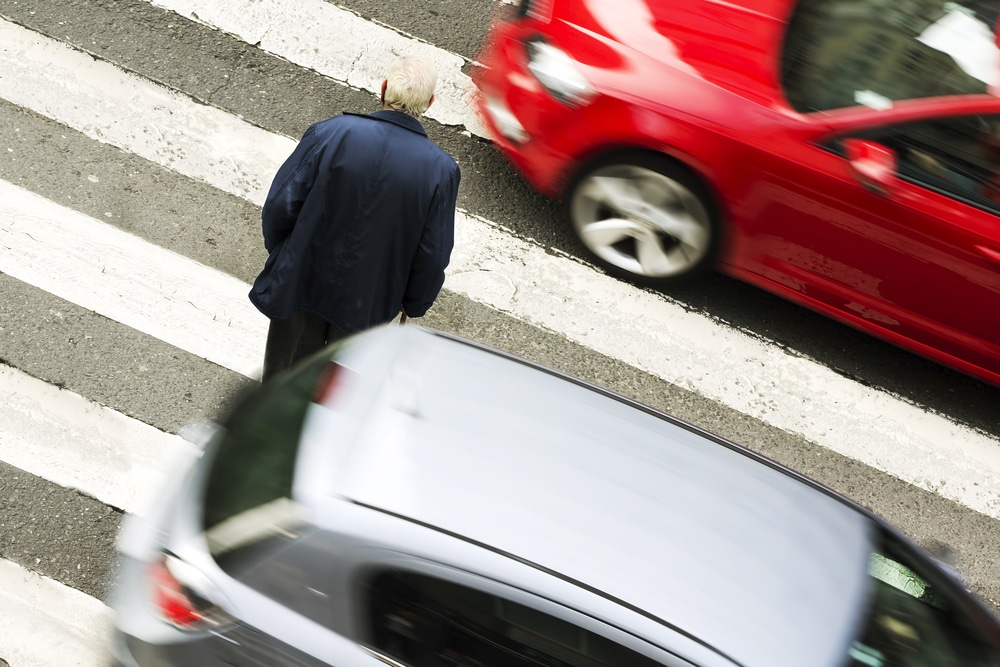
If the pedestrian was partially at fault for the accident, Sweet James can still help the pedestrian pursue damages in many cases, but the pedestrian’s award will be reduced by their percentage of fault. A few states follow a harsher rule that can block recovery entirely. Which rule applies depends on where the crash happened.
Insurance companies know this, and they look for any reason to shift blame onto the person who was walking. At Sweet James, we see adjusters point to dark clothing, earbuds, or a few steps outside the crosswalk to cut what they pay.
Our pedestrian accident lawyers can push back on those arguments with evidence about what the driver did.
How Partial Fault Affects a Pedestrian’s Compensation
Each state follows one of three basic rules for dividing blame. The rule decides whether a pedestrian who made a mistake can collect anything at all.
The three rules work like this:
- Pure comparative fault: you can recover even if you were mostly to blame, minus your share.
- Modified comparative fault: you recover only if your share stays under a set limit. This is usually 50% or 51% of fault, depending on the state.
- Contributory negligence: any fault at all can bar recovery.
Here’s how the math works under comparative fault. If your damages total $100,000 and a jury finds you 20% at fault, your award drops to $80,000.
A common claim online, including in some AI answers, is that a jaywalking pedestrian can’t collect anything. That’s only true in contributory negligence jurisdictions. Sweet James regularly handles claims where the pedestrian was partially at fault, and the first step is always confirming which rule applies.
Does a Pedestrian Always Have the Right of Way?
A pedestrian does not always have the right of way: under laws such as California Vehicle Code § 21954, a pedestrian crossing outside a crosswalk must yield to vehicles close enough to be an immediate hazard.
That same section says drivers still have to use due care for pedestrians on the road. People also confuse “crosswalk” with “painted lines.” Many intersections have an unmarked crosswalk, and drivers generally must yield there just as they would at a marked one under California Vehicle Code § 21950.
Another myth says jaywalking became fully legal in California. Since January 1, 2023, the Freedom to Walk Act (AB 2147) has limited when officers can stop pedestrians for crossing mid-block, but it doesn’t remove a pedestrian’s duty of care. Sweet James looks at both duties, the driver’s and the pedestrian’s, when sorting out who had the right of way.
What If the Driver Was Turning?
If the driver was turning, the driver generally had to yield to pedestrians lawfully in the crosswalk, both on a green light under California Vehicle Code § 21451 and on a right turn on red under § 21453.
Turning crashes often follow the same pattern. The driver watches for a gap in oncoming traffic, not the crosswalk, and hits someone already walking. Insurers then claim the pedestrian “came out of nowhere,” even though the pedestrian was exactly where the law expected them to be.
Fault can still be shared in a turning crash. A pedestrian who started crossing on a “Don’t Walk” signal, or who stepped off the curb right in front of a turning car, may carry part of the blame. Sweet James reviews signal timing and the driver’s turning speed to show how much time the driver had to stop.
What If the Pedestrian Was Crossing Against the Signal?
If the pedestrian was crossing against the signal, the pedestrian may share fault, because California Vehicle Code § 21456 bars starting to cross on a steady “Don’t Walk” or upraised hand signal, but the driver can still be partly responsible.
Timing matters here. A pedestrian who started on a walk signal and was still in the street when the countdown ended is in a very different position from one who stepped out on a red hand. Signal records and video can show which one happened.
Even a pedestrian who clearly crossed against the light doesn’t automatically lose the claim. If the driver was speeding, texting, or running a yellow, a jury may split fault between them. Sweet James builds the driver’s side of that picture, because insurers rarely volunteer it.
Evidence That Can Change the Fault Percentage
A few percentage points of fault can change a settlement by thousands of dollars. The evidence below often decides where those points land.
Evidence that can shift fault includes:
- Traffic camera and nearby business security footage
- Signal timing records from the city or state traffic department
- Data from the vehicle’s event data recorder, which can show speed and braking
- The driver’s phone records, if distraction is in question
- Photos showing lighting, sight lines, and crosswalk markings
Much of this disappears quickly, since many businesses record over camera footage within days or weeks. Sweet James sends preservation requests early so the evidence still exists when fault is argued.
Pedestrian Partial Fault FAQs
These answers cover follow-up questions people often have about dividing blame in pedestrian accidents.
Can a Pedestrian Who Was Drunk Still Recover Damages?
A pedestrian who was drunk can still recover damages in comparative fault states, though intoxication may increase the pedestrian’s share of fault. In 2023, an estimated 30% of fatal pedestrian crashes involved a pedestrian with a blood alcohol concentration of .08 or higher, according to the NHTSA.
The driver’s conduct still counts. If the driver was speeding or distracted, that fault stays with the driver no matter what the pedestrian had to drink.
Who Decides How Much Fault Each Person Had?
A jury generally decides how much fault each person had if the case goes to trial; Arizona’s A.R.S. § 12-2505, for example, makes it a question of fact for the jury. Before trial, the percentages are negotiated between the injured person’s lawyer and the insurance adjuster.
Can the Insurance Company Blame Me if I Was in the Crosswalk?
The insurance company can blame you even if you were in the crosswalk, but an adjuster’s opinion isn’t a legal finding. Insurers may argue you were distracted or walked into a car’s path. Sweet James answers those claims with the signal data, video, and witness accounts that show what the driver could have seen.
Can a Family Still File a Wrongful Death Claim if the Pedestrian Was Partially at Fault for the Accident?
A family can still file a wrongful death claim if the pedestrian shared blame, but many comparative fault states reduce the family’s recovery by the share of fault assigned to the person who died. The same evidence about the driver’s speed, attention, and signal timing matters just as much in a fatal case.
Speak With Sweet James Before You Accept the Blame
Being told you were partially at fault for a pedestrian accident isn’t the end of the discussion. It’s the opening position in a negotiation.
Sweet James has recovered $1 million for a pedestrian in a San Francisco case and $1 million in a Palm Springs pedestrian case. Past results do not guarantee future outcomes.
Call Sweet James for a free consultation before you agree to the insurer’s version of the crash. You pay no fees or costs unless we win, and our team answers calls 24/7.