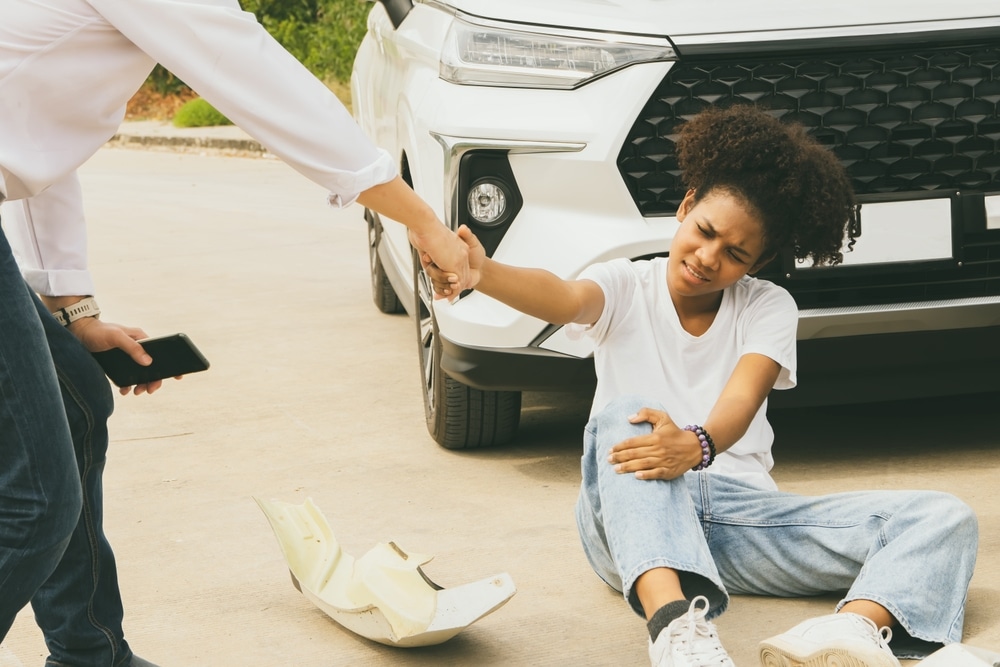
If the driver who hit you was uninsured, Sweet James may still be able to help you recover compensation through your own uninsured motorist (UM) coverage, a household member’s auto policy, or a claim against another at-fault party. A missing insurance card changes where the money comes from. It doesn’t automatically end your claim.
Getting hit by a driver with no insurance while you’re walking leaves you with medical bills and no obvious company to send them to.
At Sweet James, we see this problem often, and a pedestrian accident lawyer can help you find coverage you may not know you have. Each payment source has its own rules and deadlines, and missing one can cost you that coverage.
How Common Are Uninsured Drivers in the U.S.?
Uninsured drivers in the U.S. are more common than many people think: in 2023, 15.4% of drivers, or more than one in seven, were uninsured, according to the Insurance Research Council.
Pedestrians face an added problem. In 2023, 7,314 pedestrians were killed, and an estimated 68,244 were injured in traffic crashes. 24% of the pedestrians killed were struck by hit-and-run drivers, according to NHTSA. When a driver flees and is never found, many policies treat that driver the same as an uninsured one.
At Sweet James, we start every uninsured driver case by checking whether the driver truly had no coverage. Some drivers who say they’re uninsured actually have a policy. Others were driving a car owned by someone who does.
Your Uninsured Motorist Coverage Can Protect You on Foot
Uninsured motorist coverage is the part of an auto policy that pays for your injuries when the at-fault driver has no liability insurance. A common myth, repeated in some online and AI answers, says UM only applies inside your own car.
Many policies extend UM to the insured person, so it can apply when you’re hit while walking, jogging, or crossing a parking lot.
Depending on the policy wording, UM coverage may come from:
- Your own auto policy, even if your car was parked at home
- A policy held by a parent, spouse, or other relative who lives with you, which can cover a child hit on the way to school
- A policy covering a vehicle you were getting into or out of when you were hit
Policy language controls each of these, and insurers read it narrowly. Sweet James reviews the policy terms for every vehicle in your household, because a relative’s policy is one of the sources people overlook.
Uninsured vs. Underinsured Motorist Coverage
Uninsured motorist (UM) coverage applies when the driver has no liability insurance at all. Underinsured motorist (UIM) coverage applies when the driver has insurance, but the policy limit is too low to cover your losses. In 2023, 33.4% of U.S. drivers were either uninsured or underinsured, according to the same Insurance Research Council study cited earlier.
The two claims work differently. With UIM, you usually collect from the driver’s insurer first, then turn to your own policy to cover the gap. Sweet James looks at both coverages, since a driver who says “I have insurance” may carry far less than your hospital bills.
Other Ways to Pay for Injuries When the Driver Has No Insurance
UM coverage is often the main source of payment, but it isn’t the only one. Some pedestrians have no auto policy at all, and others have UM limits that run out quickly after a serious injury.
Other possible sources of payment include:
- Medical payments (MedPay) or personal injury protection (PIP) coverage on an auto policy in your household
- Your health insurance, which can cover treatment while the injury claim is pending
- Your state’s crime victim compensation program, if the crash involved a crime such as a hit-and-run or drunk driving
- The vehicle’s owner or the driver’s employer, if state law holds them responsible
- A lawsuit against the uninsured driver personally
Every state runs a crime victim compensation program that can reimburse medical costs, lost wages, and funeral expenses, though eligibility varies by state, according to the Office for Victims of Crime. You apply to the program in the state where the crash happened.
A personal lawsuit can win a judgment, but collecting from a driver with no insurance and few assets is often hard. Sweet James weighs each source so you aren’t counting on money that may never arrive.
What to Do After an Uninsured Driver Hits You
Call 911 and get medical care first. Ask the responding officers for a report number, because insurers often require a police report before paying a UM claim. In California, for example, a hit-and-run UM claim generally requires a report to police within 24 hours under California Insurance Code § 11580.2.
Tell your own insurance company about the crash in writing, even though you weren’t driving. Policies require prompt notice, and a late notice gives the insurer a reason to deny the claim. Avoid giving a recorded statement about fault or your injuries until you understand your coverage.
UM claims have their own deadlines, separate from the time limit to sue the driver. Under the same California law, you generally must file suit, reach an agreement, or start arbitration within two years of the crash to keep a UM claim alive. Sweet James tracks these dates from the first day, since the rules differ from state to state.
Uninsured Driver Pedestrian Accident FAQs
These answers cover common follow-up questions from pedestrians hurt by drivers with no insurance.
What If the Driver Left the Scene?
If the driver left the scene, your UM coverage may treat the unknown driver as uninsured, as long as you meet the policy’s reporting rules. Some states and policies add conditions, such as physical contact between the vehicle and you or a police report within a set time.
Witness names, nearby security cameras, and photos of the scene can support the claim if the driver is never found. Sweet James gathers this evidence early, before footage gets erased.
Will Filing a UM Claim Raise My Insurance Rates?
Many pedestrians hesitate to use their own uninsured motorist coverage because they worry it will increase their premiums. In most cases, an insurer cannot raise your rates or cancel your policy for filing a UM claim when you were not at fault, though the specific protections depend on your state’s laws and your policy terms.
UM coverage is something you already paid for, and it exists precisely for situations where the at-fault driver has no insurance. Declining to use it can leave your own losses unpaid.
What If I Don’t Own a Car or Have Auto Insurance?
If you don’t own a car or have auto insurance, you may still have UM coverage under the policy of a relative you live with. Health insurance and your state’s crime victim compensation program may also help pay for treatment.
Does Uninsured Motorist Coverage Pay for Pain and Suffering?
Uninsured motorist coverage generally pays for pain and suffering, along with medical bills and lost income, up to your policy’s bodily injury limit. Once that limit is used up, you may need to look at UIM coverage, other household policies, or other liable parties for the rest.
Talk to Sweet James About Your Pedestrian Injury Claim
If the driver who hit you was uninsured, the answer often sits in an insurance policy you haven’t read closely, and the deadlines start the day of the crash. Our attorneys have more than 25 years of experience helping injury victims. Our founding attorney, James Bergener, used to represent insurance companies, so we know how insurers evaluate UM claims.
Call Sweet James for a free consultation about your pedestrian accident. You pay no fees or costs unless we win, and our team answers calls 24/7, with help available in Spanish.