Avoiding truck accidents starts with giving commercial vehicles more room, staying visible, and avoiding sudden moves near them.
Sweet James offers free, confidential case reviews for people injured in collisions with large trucks. Our truck accident lawyers can investigate your crash while you focus on medical care and recovery.
Safely Sharing the Road with Commercial Motor Vehicles
Large trucks need more time and distance to stop than passenger cars. Their height, weight, long wheelbase, and trailer movement also pose hazards that may not be apparent to a nearby driver.
Rainy weather can push a loaded truck’s stopping distance well past what you’d expect from a car. So can a downhill grade or heavy traffic forcing hard braking. Give trucks more room than you’d leave for sedans, especially if the roads are wet or you’re on a hill, because the driver physically can’t stop or swerve as fast as you might assume.
Sweet James can review police reports, photographs, vehicle damage, and witness accounts following a commercial truck collision. Our team can also answer your questions and explain who may be liable for a truck accident.
Mastering the “No-Zone”: Navigating Truck Blind Spots
Truck blind spots, often called no-zones, extend around the front, rear, and sides of the vehicle. A truck driver may lose sight of a smaller car even when it seems close enough to be obvious.
Knowing where visibility is limited can help you avoid truck accidents. Treat each no-zone as a place to leave quickly and carefully.
- Front no-zone: Do not cut in closely after passing a truck. A loaded truck may need far more room to stop, and the driver may temporarily lose sight of a car directly ahead.
- Rear no-zone: Avoid following so closely that the trailer blocks your view. If you cannot see the truck’s side mirrors, the driver cannot see you.
- Side no-zones: The blind area is especially large on the passenger side. Do not remain beside the trailer longer than necessary.
When passing a truck, wait until the lane ahead is clear before moving into a blind spot, and signal first. Once you’re alongside, hold your speed, and don’t move back in until the whole front of the truck is visible in your rearview mirror.
Also remember that trucks make wide right turns. A truck may move left before turning right. Never enter the open space between the truck and the curb.
Tactical Defensive Driving Around Large Trucks
Defensive driving means planning for a truck’s size and limited maneuverability. It does not require guessing what the driver will do. Instead, create room and make your own movements easy to understand.
Use these practices on highways, interstates, and local roads:
- Pass on the left: The driver generally has better visibility there. Complete the pass without speeding or staying beside the cab or trailer.
- Maintain an acceptable following distance: Hang back a bit more than feels necessary; that extra gap may keep your car from sliding under the trailer if it stops short.
- Give merging trucks room: If a truck is merging into your lane, ease off the gas rather than racing to close the gap in front of it.
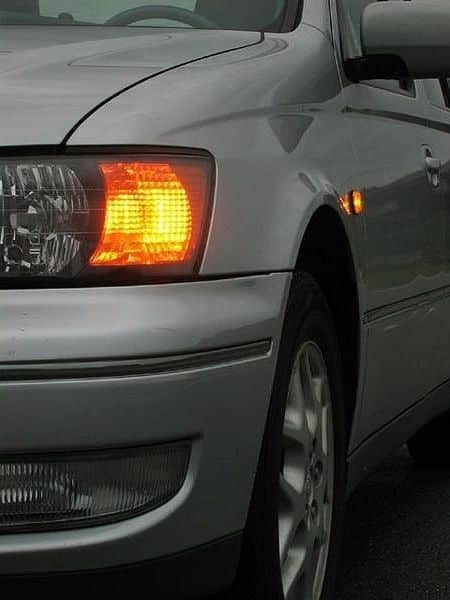
- Signal early: Turn on your signal before you move over, and don’t slam on your brakes right in front of a truck if you can help it.
- Watch the trailer: The trailer doesn’t always stay in its lane during a turn; the back end can swing out into the adjacent lane.
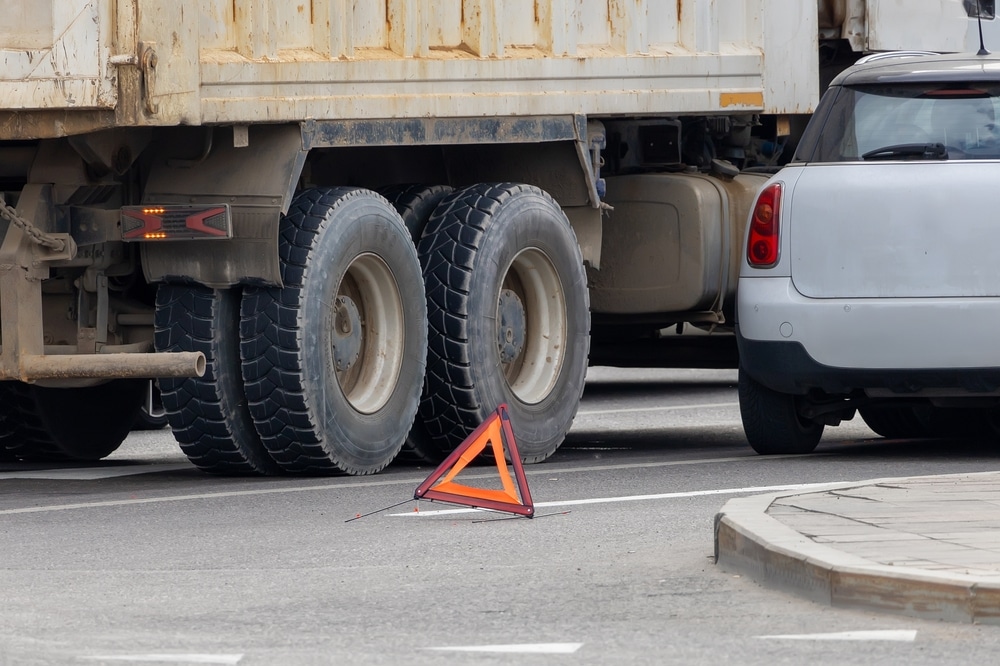
- Be cautious of roadside trucks: A truck pulled over on the shoulder isn’t out of the way; it’s still a hazard, so give it the same room you’d give a moving one.
Following rules like these won’t prevent every crash. When an accident happens, Sweet James will look at what the driver did, what the carrier required of them, and whether the truck itself was part of the problem.
The Hidden Causes of Trucking Accidents
A worn brake pad that nobody flagged or a maintenance log signed off without anyone actually looking at the truck are exactly the type of situations that can cause an accident.
Telling drivers to be more careful doesn’t fix a problem that was already there before the truck left the lot. That’s on the carrier, and so is whatever schedule pushed a driver past the hours they should’ve been on the road in the first place.
IIHS research found that trucks with vehicle defects were more than three times as likely to crash as well-maintained trucks. The finding does not prove that every defect caused a collision, but it shows why inspections and repairs matter.
Records That May Reveal Trucking Company Negligence
After a crash, a few records may show whether the company ignored a safety problem, such as:
- Electronic logs showing driving and rest time
- Inspection, repair, and maintenance records
- Dashcam footage
- Cargo paperwork
- The driver’s qualifications and training records
A violation only matters if it’s tied to what actually happened in the crash. A blown tire that was already worn down is relevant. A paperwork mistake with no connection to the collision probably isn’t.
Sweet James can compare those records with the physical evidence to determine whether the driver, carrier, loader, or maintenance contractor may share responsibility.
Consult a Truck Accident Lawyer After a Crash
Learning how to avoid truck accidents can reduce risk, but another driver or company may still create an unsafe situation. After a crash, seek medical attention, report the collision, photograph the scene if possible, and keep the records you receive.
Sweet James can handle insurer communication and paperwork while investigating the truck, driver, carrier, and available coverage. Our legal team can answer your questions and protect your rights after an accident.
Deadlines and evidence issues can affect your options. Contact Sweet James for a free case review and ask what steps you can take to protect your claim.