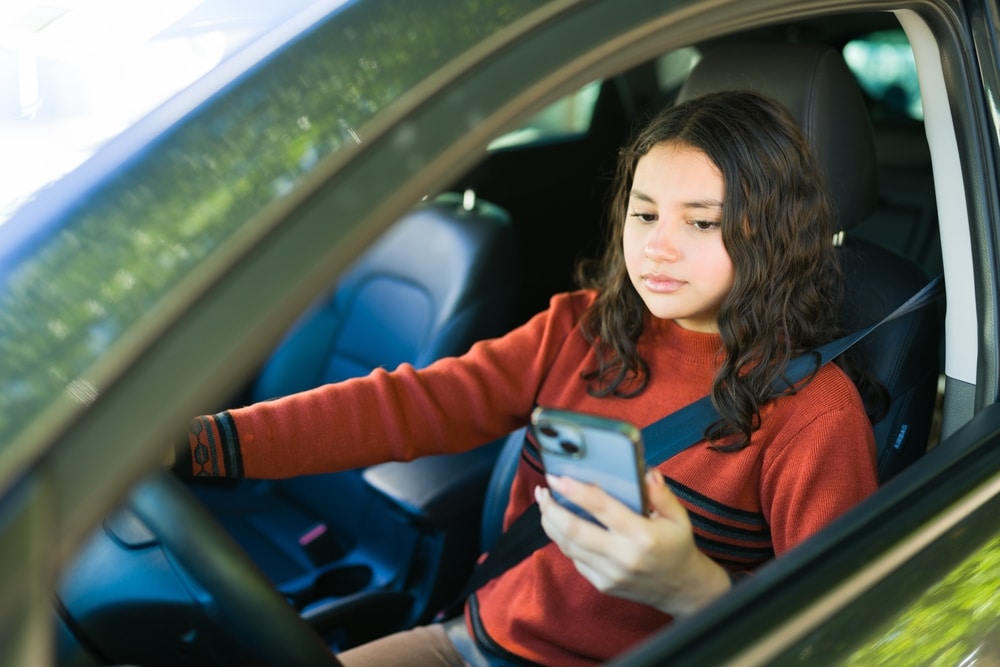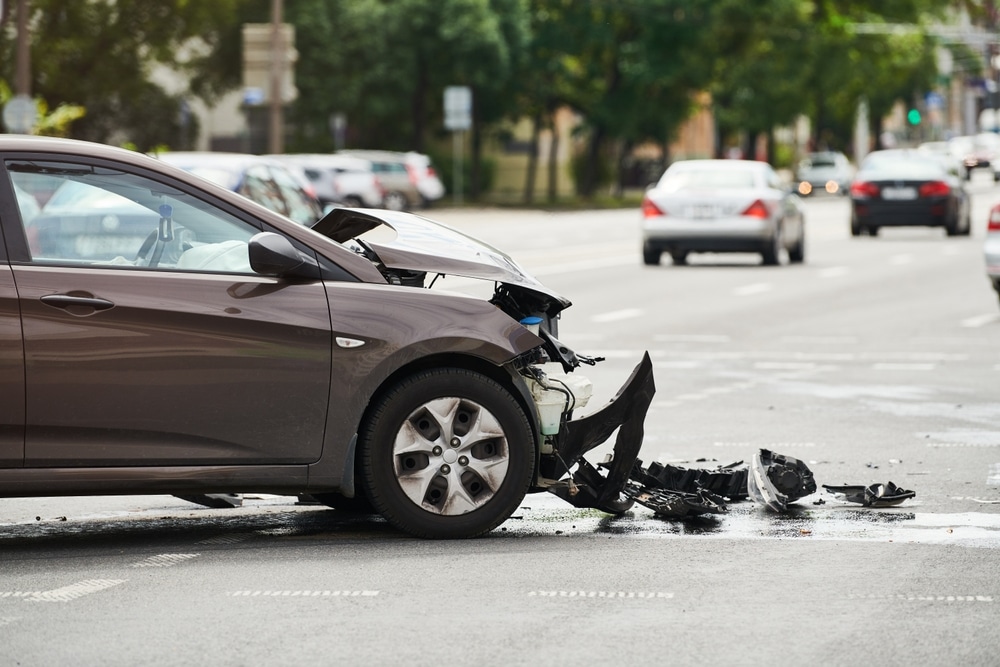
California car accident negligence laws help determine who’s responsible when a crash happens. Maybe someone was speeding, looking at their phone, or turning left without checking for oncoming traffic. Whatever happened, California has laws that help establish whether a driver was careless and whether that carelessness caused someone else’s injuries.
Of course, figuring out who’s at fault isn’t always straightforward. At Sweet James, our California car accident lawyer team helps injured people understand how these laws apply to their situation.
What Counts as Negligence in a California Car Accident?
Not every car accident means someone was negligent. Sometimes drivers make mistakes that don’t amount to a legal violation. Other times, a driver ignores a basic safety rule and causes a crash that could have been avoided. A car accident lawyer can help you determine negligence.
California Civil Code Section 1714 holds people responsible when their failure to use ordinary care causes someone else harm. That applies to driving, too. Whether you’re approaching a busy intersection or dealing with sudden traffic, you’re expected to pay attention and take reasonable steps to avoid an accident.
To prove negligence, you generally need to establish four things:
- Duty of care: The other driver had a responsibility to operate their vehicle with reasonable care.
- Breach of duty: They failed to meet that responsibility, such as by speeding or driving while distracted.
- Causation: Their actions were a substantial factor in causing your injuries.
- Damages: You suffered losses because of the accident, including medical bills, lost income, or pain.
These elements are also addressed in California’s Civil Jury Instructions, including CACI Nos. 400, 401, and 430. The important thing to remember is that a traffic violation doesn’t automatically mean someone owes you compensation. You still need evidence connecting what the driver did to the injuries you suffered.
Call or text (800) 900-0000 or complete a Free Case Evaluation form
California Traffic Laws That Can Help Prove Negligence
California has quite a few traffic laws that come into play after an accident. Some are obvious, like stopping at red lights. Others deal with less clear situations, such as how closely someone can follow another vehicle or when changing lanes becomes unsafe.
Here are some of the California Vehicle Code sections that frequently matter in car accident claims.
Speeding and Following Too Closely
Laws regarding speed and tailgating include:
- Vehicle Code Section 22350, basic speed law: Requires drivers to maintain a reasonable speed for traffic, weather, visibility, and road conditions.
- Vehicle Code Section 22349, maximum speed limits: Establishes general highway speed limits, including 65 mph unless another limit applies.
- Vehicle Code Section 21703, following distance: Prohibits following another vehicle more closely than is reasonable and prudent.
Driving under the speed limit doesn’t always mean you’re driving safely. If it’s raining hard, visibility is poor, or traffic has slowed down, you may need to reduce your speed even further. California’s basic speed law takes these conditions into account when determining whether a driver was going too fast.
Right-of-Way and Intersection Accidents
Here is a look at rules for yielding to pedestrians:
- Vehicle Code Section 21801, left turns: Before making a left turn, drivers have to let oncoming traffic pass if the vehicles are too close for them to turn safely.
- Vehicle Code Section 21802, stop-sign intersections: Drivers must stop at the sign, check for approaching vehicles, and yield to traffic that’s close enough to make entering the intersection unsafe.
- Vehicle Code Section 21804, entering a highway: Requires drivers entering from private property or alleys to yield when necessary.
- Vehicle Code Section 21453, red lights: Establishes rules for stopping and turning at red traffic signals.
- Vehicle Code Section 22450, stop signs: Requires drivers to stop at the appropriate location before proceeding.
It’s not unusual for drivers to give different accounts of an intersection crash. Someone making a left turn may believe they had plenty of room, while the oncoming driver says they had to brake to avoid getting hit. Looking at the traffic signals, where the vehicles were, and what witnesses saw can help clear up who was responsible.
Lane Changes and Distracted Driving
California negligence laws related to driver inattention and lane changing include:
- Vehicle Code Section 22107, unsafe movements: Prohibits turning or moving right or left unless it can be done with reasonable safety.
- Vehicle Code Section 22108, turn signals: Generally requires signaling continuously during the last 100 feet before turning.
- Vehicle Code Section 21658, lane discipline: Requires drivers on qualifying multilane roads to stay within a single lane as nearly as practical.
- Vehicle Code Section 23123.5, electronic devices: Generally prohibits holding and operating a handheld electronic communications device while driving, with certain exceptions.
It only takes a moment of distraction or a poorly timed lane change to cause a crash on roads like the Pacific Coast Highway or U.S. Route 101. When investigating an accident, Sweet James looks beyond the damage to the vehicles to understand what each driver was doing in the moments leading up to the collision.
Impaired and Reckless Driving
In California, you must adhere to these laws related to impairment and reckless negligence:
- Vehicle Code Section 23152, impaired driving: Prohibits driving under the influence of alcohol or drugs and establishes related offenses.
- Vehicle Code Section 23103, reckless driving: Prohibits driving with willful or wanton disregard for people’s safety or property.
These violations may lead to criminal charges, but criminal proceedings and personal injury claims are separate matters. An injured person still needs to establish the basis for civil liability.
Call or text (800) 900-0000 or complete a Free Case Evaluation form
Can Breaking a Traffic Law Automatically Prove Negligence?
Not automatically, but a traffic violation can make a difference. Under California Evidence Code Section 669, violating certain safety laws can create a rebuttable presumption of negligence. This legal principle is called negligence per se.
For the presumption to apply, several conditions generally must be met:
- Violation: The driver broke an applicable law or regulation.
- Cause: The violation caused the injury or harm.
- Type of injury: The harm was the kind the law was intended to prevent.
- Protected person: The injured person belonged to the group the law was designed to protect.
Think about someone running a red light and hitting a vehicle crossing the intersection. The red-light violation may help establish negligence because the law exists to prevent that kind of danger. Still, the circumstances and available evidence matter.
A car accident lawyer may review photographs, police reports, video footage, witness statements, and medical records to help establish what happened. Sweet James also uses data from thousands of injury cases when evaluating claims.
Call or text (800) 900-0000 or complete a Free Case Evaluation form
Other California Laws That May Affect Your Accident Claim
Negligence isn’t the only legal issue after a crash. You may also have questions about insurance, reporting the collision, and how long you have to take legal action.
Accident Reporting Laws
Drivers involved in a California car accident have certain responsibilities before leaving the scene. If someone is hurt or killed, Vehicle Code Section 20001 requires the driver to stop. When the accident only involves property damage, Section 20002 applies and includes requirements for stopping and exchanging information.
When someone is hurt, Vehicle Code Section 20003 also requires drivers to share certain information and provide reasonable assistance. There’s paperwork to consider, too. Under Section 20008, qualifying injury or fatal accidents generally must be reported in writing to law enforcement within 24 hours.
California also requires certain accidents to be reported to the DMV. Under Vehicle Code Section 16000, drivers generally have 10 days to report a crash that caused an injury, a death, or more than $1,000 in property damage. You may need to file this report even if the accident wasn’t your fault.
Call or text (800) 900-0000 or complete a Free Case Evaluation form
California Negligence Laws FAQs
At Sweet James, our California car accident lawyers want to help you stay informed so you know how to proceed. Here are the answers to questions we see from crash victims throughout California.
What Happens if Both Drivers Were Negligent?
If both drivers were negligent, you don’t necessarily lose your right to compensation just because you contributed to the accident. California uses pure comparative negligence, a rule established by the California Supreme Court in Li v. Yellow Cab Co. (1975) 13 Cal.3d 804.
Under this rule, you may still recover damages when you’re partly responsible, although your share of fault generally reduces your recovery. There’s another rule worth knowing. Civil Code Section 1431.2 generally makes each defendant responsible for non-economic damages according to their own percentage of fault.
Fault isn’t always as clear as an insurance company initially suggests. Sweet James reviews the evidence to better understand what each driver did and how those actions contributed to the accident.
What Are California’s Limited Liability Car Insurance Requirements?
Under Vehicle Code Section 16056, California’s minimum liability insurance limits are $30,000 for injuries to one person, $60,000 for injuries to multiple people in one accident, and $15,000 for property damage.
Additionally, under Vehicle Code Section 16020, drivers and vehicle owners must be able to show they can cover certain costs if an accident happens. Most people meet this requirement by carrying auto insurance.
These amounts are simply the minimum coverage California requires drivers to carry. They don’t necessarily reflect the full cost of someone’s injuries after a crash. You can read more about the state’s insurance rules through the California DMV.
What Deadlines Apply to California Car Accident Claims?
As a car accident victim, you may be required to meet deadlines such as:
- Code of Civil Procedure Section 335.1, personal injury: Generally gives injured people two years to file a lawsuit.
- Code of Civil Procedure Section 338, property damage: Generally allows three years to file a property damage lawsuit.
- Government Code Section 911.2, government claims: Generally requires qualifying injury claims against public entities to be presented within six months.
Deadlines can change depending on the circumstances, so it’s important not to assume you have the full two years. Waiting can also make evidence harder to find.
Talk to Sweet James About Your California Car Accident
California car accident negligence laws cover a lot of ground, and knowing which ones apply isn’t always simple. A driver might have broken several traffic rules, or both drivers may have contributed to what happened. The details of your accident will help determine your legal options.
At Sweet James, we focus exclusively on accident and personal injury cases. Our attorneys have more than 25 years of experience helping injury victims, and our team includes more than 400 legal professionals. While past results do not guarantee future outcomes, our California car accident case results include recovering nearly $17.5 million for a crash victim in Hanford.
If you’ve been hurt in a crash, contact Sweet James for a free consultation. We’re available 24/7, offer assistance in Spanish, and handle injury cases on a contingency fee basis. You pay no fees or costs until we win. Get in touch to discuss what happened and how we may be able to help.
Call or text (800) 900-0000 or complete a Free Case Evaluation form