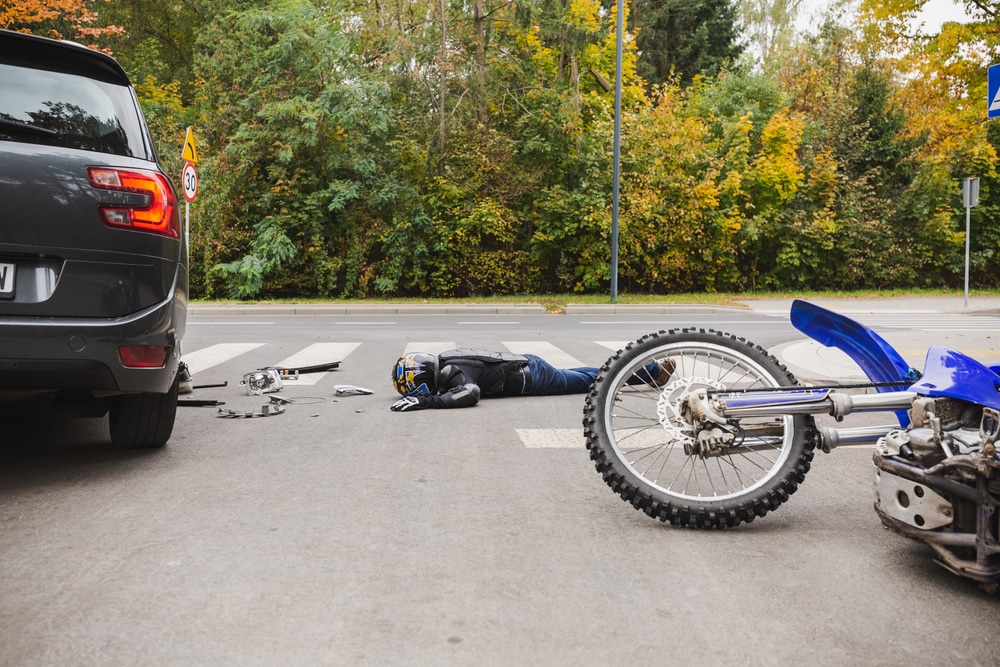
California’s pedestrian right-of-way laws generally require drivers to yield to pedestrians crossing in marked or unmarked crosswalks at intersections. Pedestrians must also follow applicable signals and use reasonable care. Outside a crosswalk, you must yield to vehicles that are close enough to pose an immediate hazard.
Your crossing location does not determine fault by itself. A Newport Beach pedestrian accident lawyer from Sweet James can explain which crossing rules apply, examine the driver’s conduct, and assess how the evidence supports your injury claim.
When Do California Pedestrian Right-of-Way Laws Require Drivers to Yield?
California Vehicle Code Section 21950 requires drivers to yield to pedestrians crossing within marked crosswalks and unmarked crosswalks at intersections, subject to applicable crossing rules. A driver approaching a pedestrian in a crosswalk must slow down or take other necessary action to protect that person.
Yielding requires more than acknowledging that someone is crossing. Drivers must allow pedestrians to proceed safely, stopping when necessary. A green light does not give a turning driver permission to cut across the path of a pedestrian who is lawfully crossing.
Drivers also cannot overtake and pass a vehicle stopped at a crosswalk to let a pedestrian cross. When Sweet James investigates a collision, we examine whether the driver approached at a safe speed, watched for pedestrians, and responded appropriately to traffic ahead.
Do Unmarked Crosswalks Give Pedestrians the Right of Way?
A legal crosswalk can exist without painted lines. Under California Vehicle Code Section 275, an unmarked crosswalk generally follows the extension or connection of sidewalk boundaries at an intersection where roads meet at approximately right angles. The definition excludes an alley’s sidewalk extension across a street.
Posted restrictions also affect whether a crossing is permitted. California’s definition excludes locations where local authorities have placed signs prohibiting crossing. You should not assume that every intersection has a crosswalk in every direction.
Sweet James reviews the intersection’s layout, sidewalk boundaries, signs, and signals when applying right-of-way rules for pedestrians. The absence of painted stripes does not, on its own, establish that you crossed outside a crosswalk or failed to yield.
How Do Pedestrian Signals Affect Your Right to Cross?
Where pedestrian signals are installed, follow the display facing your crossing. California Vehicle Code Section 21456 distinguishes between a walk signal, a flashing hand with a countdown, and a hand signal without a countdown.
Walk Signal
A “WALK” display or walking-person symbol permits you to begin crossing. You must still yield to vehicles already lawfully within the intersection when that signal first appears. Check for turning traffic before entering the roadway.
Flashing Hand With a Countdown
California permits you to begin crossing during a flashing hand or “DON’T WALK” display accompanied by a countdown. You must finish crossing before the countdown ends and the steady hand appears. If the remaining time is insufficient, wait for the next walk signal.
Steady Hand or Flashing Hand Without a Countdown
Do not begin crossing on a steady hand or a flashing hand without a countdown. If you started during the walk signal, continue to the sidewalk or a safety zone. A signal change does not authorize a driver to proceed into your path.
What Are the Pedestrian Right-of-Way Rules Outside Crosswalks?
Under California Vehicle Code Section 21954, pedestrians crossing outside a marked crosswalk or an unmarked crosswalk at an intersection must yield to vehicles that are close enough to pose an immediate hazard. Drivers still must exercise reasonable care to avoid a collision.
Section 21955 also restricts crossing between adjacent intersections controlled by traffic signals or police officers to crosswalks. These laws governing pedestrian crossings require attention to the surrounding intersections, not just the pavement where you entered the street.
California’s Freedom to Walk Act limits police stops for specified pedestrian crossing violations unless a reasonably careful person would recognize an immediate collision danger. It does not grant pedestrians unrestricted priority or relieve either party of their duty to use care.
Can You Recover Compensation if You Were Partly Responsible?
California follows pure comparative negligence. You can generally recover compensation when another party shares responsibility, but your damages are reduced by your percentage of fault. Being more than 50% responsible does not automatically bar recovery.
For example, if your damages total $100,000 and you are found 20% responsible, your recovery would generally be reduced to $80,000 before fees and other deductions. The percentage must reflect the evidence, rather than an insurer’s unsupported accusation.
A crossing violation does not resolve every question about liability. Sweet James also assesses whether speeding, distraction, an unsafe turn, or a failure to keep watch contributed to the collision. Both parties’ conduct must be considered when applying pedestrian crossing and right-of-way rules.
What Evidence Helps Resolve a Pedestrian Right-of-Way Dispute?
We look for evidence showing where you crossed, when you entered the roadway, and what the driver could see. The location of the impact is useful, but it rarely explains the full sequence on its own.
Evidence that can clarify a disputed crossing includes:
- Scene photos showing crosswalk boundaries, signs, obstructions, and lane positions.
- Video showing the pedestrian signal and vehicle movements before impact.
- Witness accounts describing when you entered the street and how the driver approached.
- Traffic-signal timing records relevant to the intersection.
- Police observations, collision diagrams, and statements recorded during the investigation.
Recordings can be overwritten, so tell us about nearby cameras early. We compare available sources rather than treating a citation or police report as a final determination of civil fault. Medical records separately help establish your injuries and related losses.
What Should You Do After a Pedestrian Collision?
Call 911 if anyone needs emergency assistance, and obtain medical care without delaying treatment to collect evidence. When safe, record the driver’s contact and insurance information, witness details, and the collision location.
Keep copies of medical records, insurance correspondence, and documents showing lost income. Before accepting a settlement or signing a release, ask what claims the agreement would resolve and whether your future treatment needs have been evaluated.
California generally allows two years to file a personal injury lawsuit, but exceptions apply. Claims against California public entities usually require an administrative claim within six months, with separate deadlines for a lawsuit. Sweet James can identify the dates that apply to your circumstances.
Discuss Your Pedestrian Right-of-Way Claim With Sweet James
When fault is disputed, Sweet James examines the crossing rules alongside the evidence of what each person did. We focus exclusively on accident and personal injury cases and can assess responsibility for your medical expenses, lost earnings, and other recoverable losses.
Before founding Sweet James, James Bergener represented insurance carriers in personal injury and workers’ compensation cases. His background provides insight into how insurers evaluate claims and challenge responsibility for a collision.
Contact us for a free consultation about your pedestrian accident. We can explain the disputed issues and the steps available to pursue your claim. You pay no fees or costs unless we win, and assistance is available in Spanish.