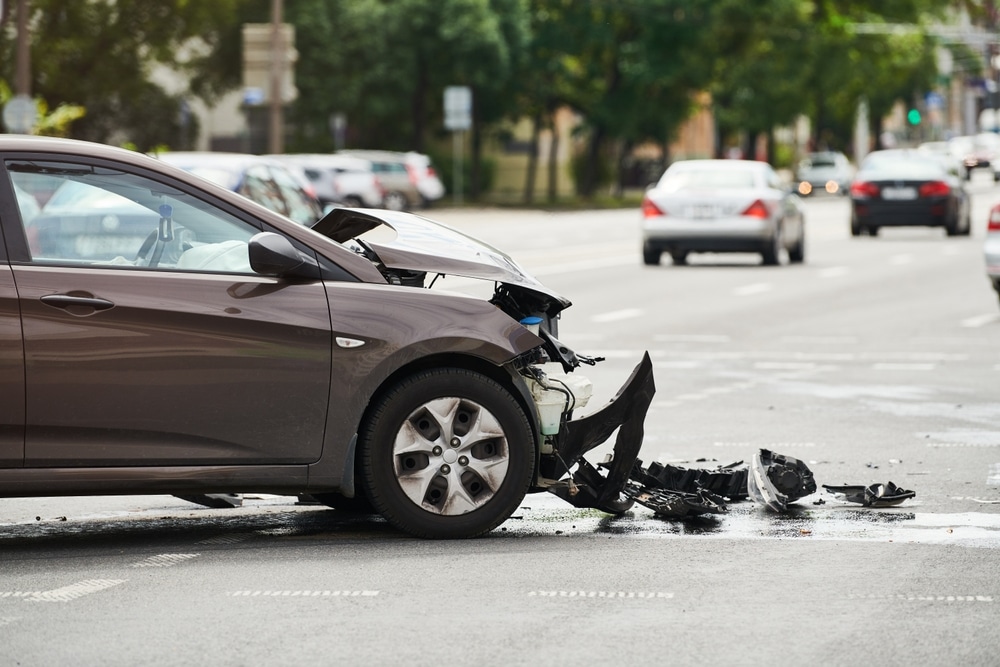

How much compensation you can get from a California car crash depends on your injuries, medical expenses, lost income, available insurance, and the evidence showing who was responsible.
If you were seriously injured, a California car accident lawyer can review those losses and explain how they may affect the value of your claim.
At Sweet James, we’ll use medical records, financial documentation, and evidence from the crash to evaluate what may be recoverable rather than relying on a generic settlement average.
What Factors Affect Compensation After a California Car Crash?
Compensation after a California car crash depends on the financial and personal losses caused by the collision.
Important factors can include:
- Medical expenses, including emergency treatment, surgery, and rehabilitation
- Future medical care when additional treatment is reasonably expected
- Lost wages from time away from work
- Reduced earning capacity if the injuries affect future employment
- Property damage
- Pain and suffering
- The amount of available insurance coverage
- The percentage of fault assigned to each person
The seriousness of an injury matters, but there is no automatic formula connecting a particular diagnosis to a particular settlement.
Sweet James can review the evidence supporting each category of loss and how your injuries have affected your everyday life.
How Much Insurance Coverage Is Required in California?
California’s minimum auto liability limits increased in 2025.
Under California Vehicle Code § 16056, qualifying policies issued or renewed from January 1, 2025 generally must provide at least $30,000 for bodily injury or death to one person, $60,000 for two or more people, and $15,000 for property damage.
Those minimums do not determine what your injuries are worth. If your losses exceed the at-fault driver’s available liability coverage, other sources may need to be considered, such as applicable underinsured motorist coverage or claims against another responsible party.
How Does Shared Fault Affect a California Car Crash Payout?
Shared fault can reduce a California car crash payout according to your percentage of responsibility.
California follows pure comparative negligence, which means a person can still recover damages even when they share a portion of the fault. For example, if your damages were valued at $100,000 and you were assigned 20% of the responsibility, the recoverable amount would generally be reduced to $80,000.
What if Several Defendants Were Responsible?
Different rules can apply when several defendants contributed to the same injury.
Under California Civil Code § 1431.2, each defendant is generally responsible for non-economic damages only in proportion to that defendant’s percentage of fault.
At Sweet James, we can review police reports, witness statements, video footage, and other evidence when responsibility is disputed.
How Does Proposition 213 Affect an Uninsured Driver’s Compensation?
Proposition 213 can prevent an uninsured driver from recovering certain non-economic damages after a California car crash, although statutory exceptions may apply.
California Civil Code § 3333.4 generally restricts uninsured motorists from recovering non-economic damages such as pain, suffering, inconvenience, and emotional distress.
Economic losses can still potentially be recoverable, including:
- Medical expenses
- Lost wages
- Property damage
- Other documented financial losses
There are exceptions to the general rule, including circumstances involving an impaired defendant who is convicted as required by the statute.
Sweet James can review whether Proposition 213 applies and whether an exception may affect your claim.
How Long Do You Have to File a California Car Crash Lawsuit?
The statute of limitations for many California car accident injury lawsuits is generally two years under California Code of Civil Procedure § 335.1.
That two-year period is the general rule for actions involving injury to a person caused by another person’s wrongful act or neglect.
Different deadlines can apply depending on the facts.
What if a Government Entity Is Involved?
Claims involving a California public entity can require much earlier action.
Under California’s Government Claims Act, a claim relating to personal injury generally must be presented to the public entity within six months after the cause of action accrues.
That administrative claim requirement is separate from the ordinary personal injury lawsuit deadline.
What if the Injured Person Is a Minor?
The ordinary limitations period can also be affected when the injured person is under 18.
Other tolling rules and exceptions may apply, so the filing deadline should be checked against the particular circumstances rather than assumed from the accident date alone.
What Types of Damages Can Be Included in a California Car Accident Claim?
A California car accident claim can include economic and non-economic damages when supported by the evidence.
Economic Damages
Economic damages cover financial losses that can usually be documented.
They may include:
- Medical bills
- Future treatment costs
- Lost wages
- Reduced earning capacity
- Vehicle repair or replacement costs
- Other accident-related expenses
Non-Economic Damages
Non-economic damages address the personal effects of an injury that do not come with a fixed invoice.
They may include physical pain, emotional distress, inconvenience, disability, and loss of enjoyment of life.
The amount depends on the actual impact of the injuries rather than a standard multiplier or statewide average.
Does a Severe Injury Always Mean a Large Settlement?
A severe injury can increase the value of a claim, but it does not guarantee a particular settlement amount.
More serious injuries may involve larger medical expenses, longer periods away from work, future treatment, or permanent limitations.
Insurance coverage, liability, causation, and the strength of the documentation still matter.
That is why broad estimates such as “six figures” or “seven figures” can be misleading when they are presented without the facts of a particular case.
How Can Sweet James Evaluate a California Car Crash Claim?
Sweet James can evaluate a California car crash claim by reviewing liability, medical evidence, financial losses, and available insurance coverage.
Founding partner James Bergener previously represented insurance carriers in personal injury and workers’ compensation matters before representing injured people.
That background can help the firm understand how claims are evaluated and defended without assuming that every insurer will respond in the same way.
Sweet James can also review settlement offers and explain how they compare with the losses supported by your records.
Why Choose Sweet James After a California Car Accident?
Sweet James reports more than $1 billion recovered for clients, more than 25 years of experience, 400+ legal professionals, and 600+ five-star reviews. Past results do not guarantee future outcomes.
Our firm’s California car accident results include several six- and seven-figure recoveries from cases involving serious auto injuries, with the amount and circumstances varying by case.
Sweet James also offers free case reviews, bilingual English and Spanish assistance, and 24/7 live help for prospective clients.
California Car Crash Compensation FAQs
Here are a few common questions about how compensation works after a California collision.
What Is the Average Car Accident Settlement in California?
There is no dependable average car accident settlement in California that can predict what an individual claim will be worth. Settlements vary with the injuries, financial losses, fault, insurance coverage, and evidence available in the particular case.
A statewide average would therefore be less useful than calculating the losses supported by your own records.
Can You Recover Compensation if You Were Mostly at Fault?
You may still recover compensation in California even if you were mostly at fault because the state follows pure comparative negligence.
Your recovery is generally reduced by your percentage of responsibility. For example, someone assigned 80% of the fault would generally be limited to recovering the remaining 20% of their damages.
Can You Recover More Than the At-Fault Driver’s Policy Limit?
You may be able to recover more than the at-fault driver’s policy limit when another source of compensation is legally available.
Possible sources can include applicable underinsured motorist coverage or another party who shares responsibility for the crash. Whether additional recovery is realistic depends on the policies, defendants, and assets involved.
Does Proposition 213 Affect Medical Bills?
Proposition 213 generally restricts certain non-economic damages rather than automatically eliminating a claim for economic losses such as medical expenses. An uninsured driver may therefore still have claims for documented financial losses, subject to the facts and other applicable law.
Exceptions to Proposition 213 may also apply in some circumstances.
Talk to Sweet James About Your California Car Crash Claim
There is no single number that answers how much compensation you can get from a California car crash.
The value of your claim depends on your injuries, financial losses, insurance coverage, fault, and the evidence supporting the claim.
Sweet James can review the factors that affect how much compensation you can get from a California car crash and explain your options during a free case evaluation.