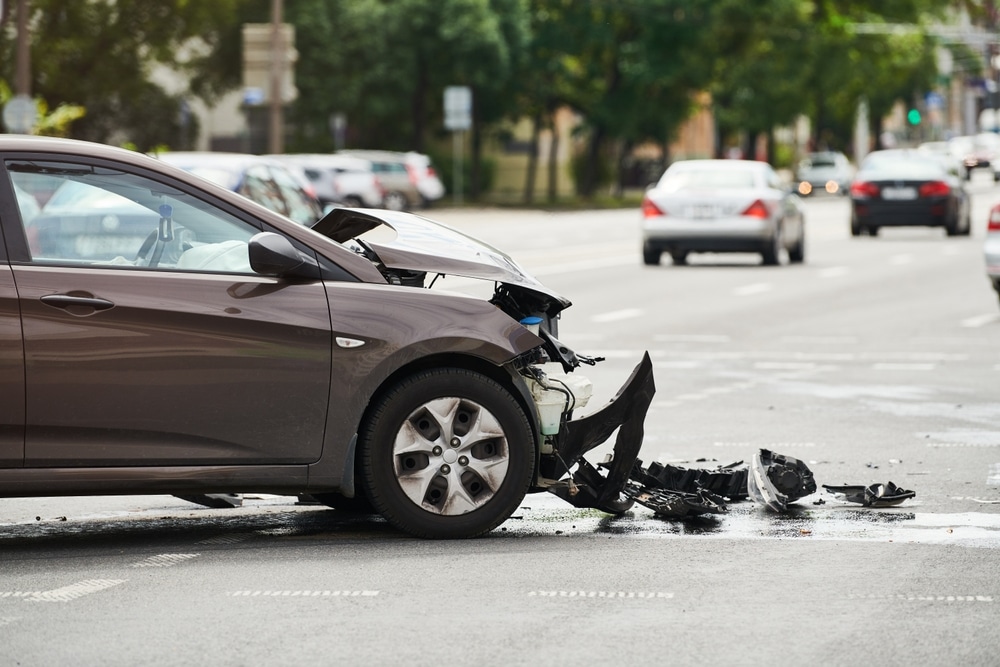
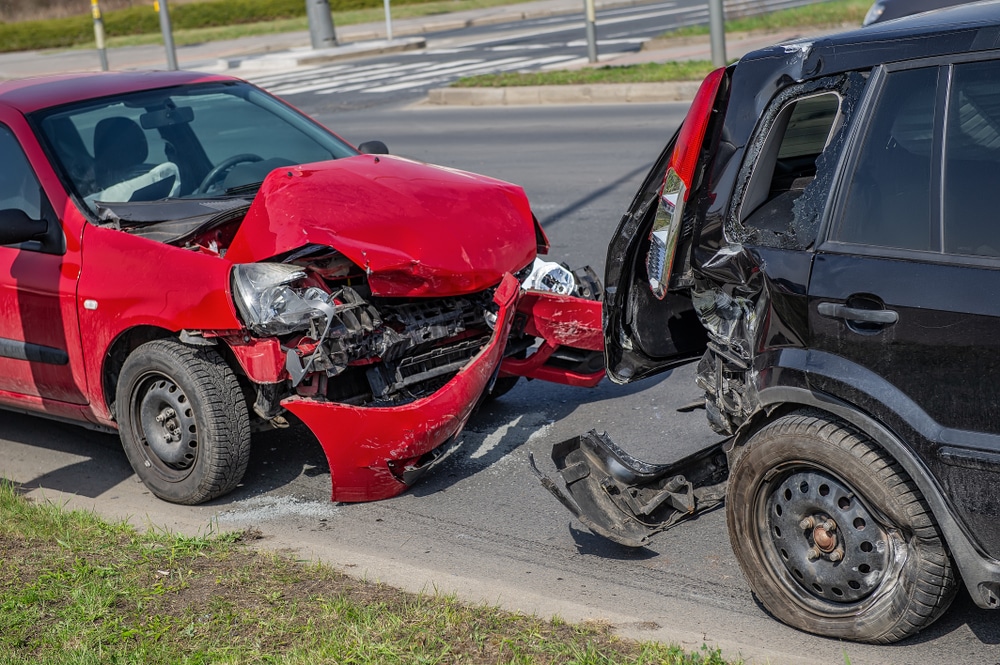
The driver in the back is usually at fault in a rear-end collision in California because they likely did not maintain a safe distance when driving. This is reflected in Vehicle Code 21703, which states that a driver of a motor vehicle must not follow another vehicle too closely when taking into account speed and traffic conditions.
However, this doesn’t mean the rear driver is automatically at fault in every crash. Exceptions exist (such as a sudden lane change, brake-checking, a multi-car chain reaction, or defective brake lights), and under California’s pure comparative negligence rule, you can still recover compensation even if you share some fault, reduced by your percentage of responsibility.
Liability depends on the circumstances of the accident, and a California car accident lawyer from Sweet James can help you figure out who is actually to blame for your rear-end collision.
Determining Fault in a California Rear-End Collision
When determining who is at fault for a rear-end collision in California, there are several factors that need to be considered. The insurance company will often start by looking at the actions of all parties involved, as well as road and weather conditions at the time of the accident, vehicle maintenance issues, and anything else that may have contributed to the crash.
A major part of this investigation will focus on whether the rear driver was following too closely, as defined in California Vehicle Code 21703.
However, it will also consider the actions of the driver in front and other parties that may have contributed to the collision.
Potential Liable Parties
Not all rear-end collisions are straightforward. Depending on the situation, there may be multiple liable parties, including:
- The rear driver: If they were tailgating, speeding, distracted, or otherwise violating Vehicle Code 21703, they may be to blame.
- The front driver: The lead driver may share responsibility if they contributed to the collision by suddenly changing lanes, braking recklessly, etc.
- Another motorist: Another motorist’s negligent actions may have caused a chain reaction collision.
- A vehicle manufacturer: If there was a defective car part that led to the crash, you may be able to hold the vehicle manufacturer at fault for your rear-end collision.
- A maintenance provider: Similarly, a repair shop or maintenance provider may be liable if negligent repairs or improper vehicle servicing caused a mechanical failure, such as faulty brakes.
- A government entity: A city government or local public works department, such as the California Department of Transportation (Caltrans) or the Los Angeles Department of Public Works, may be liable if a dangerous road condition contributed to the collision.
A car accident lawyer can help you figure out who is at fault for your rear-end collision and work to recover compensation from each party.
Common Exceptions to the Rear-End Fault Rule
Under California’s rear-end fault rule, the driver who crashes into another vehicle from behind is often considered at fault for failing to maintain a safe distance and stop in time. However, this doesn’t mean the rear driver is always automatically to blame.
Here are some common exceptions that may affect liability:
- Sudden lane changes: If you were traveling on I-5 and the driver one lane over suddenly cuts in front of you with no warning and not enough space, they may be partially responsible for the resulting collision.
- Defective brake lights: The lead vehicle may have malfunctioning brake lights that prevent you from anticipating when they’re slowing or stopping.
- Braking recklessly: Some drivers deliberately slam on their brakes to provoke the driver behind them. In this instance, the lead driver may be to blame.
- Chain-reaction collisions: If a third vehicle struck someone from behind and pushed them into the car ahead, the driver who initiated the chain may bear responsibility.
How Comparative Fault Rules May Impact Liability
Because California follows a pure comparative fault system, you can still recover compensation if you were partially to blame for the accident; however, your amount of compensation will be reduced based on your percentage of fault.
For example, if you were awarded $100,000 in compensation but you were found to be 30% liable for your injuries, you may only come away with $70,000.
When investigating your rear-end collision, insurance companies may try to assign you more fault with the aim of reducing your payout.
This is why you’ll want an experienced lawyer from Sweet James on your side. We’ll file your claim and handle all negotiations to make sure your settlement accurately reflects your damages.
FAQs About Determining Fault in a Rear-End Collision in California
Here are some answers to the most common questions we get asked about this topic:
What Is California Vehicle Code 21703?
California Vehicle Code 21703 is a state law that prohibits tailgating. Drivers must leave a “reasonable and prudent” distance between their vehicle and the vehicle in front, ensuring that the lead vehicle does not block the rear driver’s view and that the rear driver has enough time to react if the front driver brakes suddenly.
While there is no set measured distance required, the California Driver’s Handbook suggests maintaining a three–second rule when following another vehicle.
What Is the Average Payout for a Rear-End Collision in California?
There is no average payout for a rear-end collision in California. Every injury claim is based on the facts of the crash, looking at things like medical bills, lost wages, pain and suffering, property damage, and more when calculating how much the liable party could owe you.
Sweet James has recovered over $1 billion in compensation for our clients, with one of our car accident case wins in Hanford, CA, securing a $17,476,817 jury verdict. Past results do not determine future outcomes.
How Do You Prove Fault in a Rear-End Collision?
To prove fault in a rear-end collision, you need reliable evidence. This may include photographs and video footage from the accident scene, police reports from the California Highway Patrol (CHP) or local law enforcement, witness statements, medical records, and more.
Our team at Sweet James can help you gather and preserve this evidence, creating a clear picture of who was involved in the accident and how it all unfolded.
Speak to Sweet James About Liability in Rear-End Collisions
Figuring out who is at fault in a California rear-end collision may seem straightforward, but there are many ways liability can be disputed.
At Sweet James, our car accident lawyers have the experience needed to counter any underhanded tactics by insurance companies looking to shift blame and reduce your payout.
Our team is made up of more than 400 highly trained legal professionals, many of whom have featured on Super Lawyers and Rising Stars lists, so you know your case will receive the skilled attention it deserves.
Get in touch with Sweet James today to discuss your case in further detail and get help establishing fault.