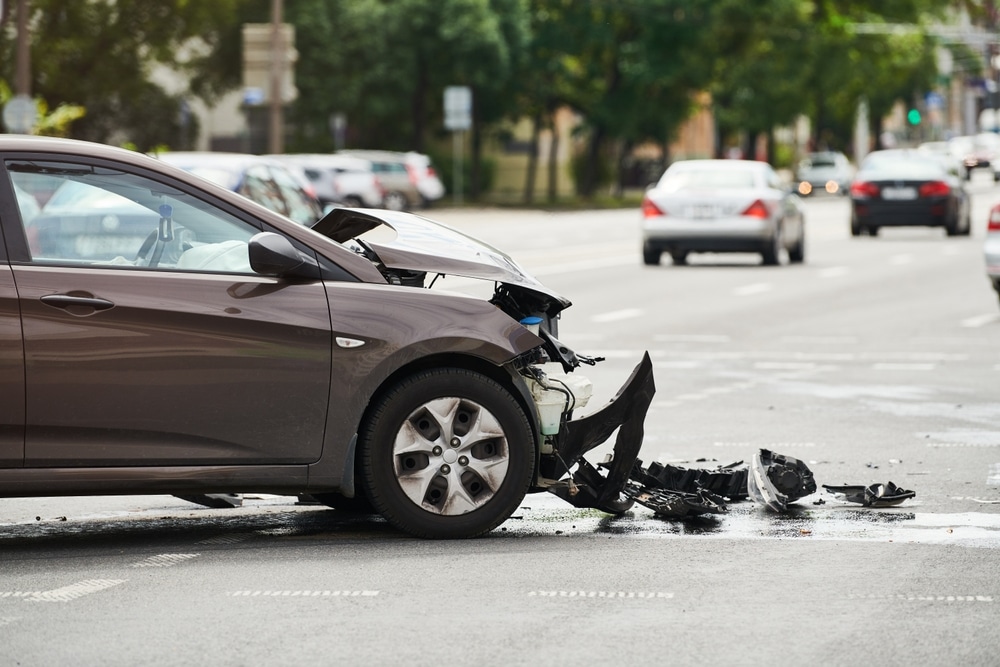
California comparative negligence law allows an injured person to recover damages even when they share some responsibility for an accident. Their compensation is generally reduced according to their percentage of fault.
Comparative negligence can become important in car crashes, falls, motorcycle accidents, premises liability claims, and many other situations where more than one person’s actions contributed to an injury.
At Sweet James, we help injured people understand how shared fault may affect a personal injury claim. A California personal injury lawyer can review the evidence, explain how responsibility may be divided, and assess the losses connected with your injuries.
What Is Pure Comparative Negligence in California?
Pure comparative negligence in California means that your damages can be reduced according to your percentage of fault without automatically eliminating your claim because you were partly responsible.
The California Supreme Court adopted the pure comparative negligence system in Li v. Yellow Cab Co. (1975). The court replaced the former all-or-nothing contributory negligence rule with a system that assigns responsibility according to each party’s share of fault.
This makes California different from states that use modified comparative negligence rules.
Pure vs. Modified Comparative Negligence
The main difference is whether there is a cutoff for recovery:
- Pure comparative negligence: An injured person may still recover damages even when they bear most of the responsibility, but their recovery is reduced by their percentage of fault.
- Modified comparative negligence: Recovery can be barred when the injured person’s share of responsibility reaches a particular threshold, commonly 50% or 51%.
Sweet James can review which actions contributed to an accident and how California’s rule may affect a particular claim.
Call or text (800) 900-0000 or complete a Free Case Evaluation form
How Does California Comparative Negligence Affect Compensation?
California comparative negligence generally reduces compensation according to the injured person’s percentage of responsibility.
For example, suppose your total damages are $100,000, but you are found 20% responsible for the accident. The calculation would be:
- Total damages: $100,000
- Your percentage of fault: 20%
- Reduction: $20,000
- Remaining damages: $80,000
The same principle can apply even when your percentage of responsibility is much higher. For example, someone found 70% responsible would generally face a 70% reduction in otherwise recoverable damages rather than an automatic bar to recovery.
That does not mean every disagreement about fault will produce a precise percentage immediately. Responsibility may be disputed during an insurance claim and, if the case proceeds to trial, ultimately determined based on the evidence.
Call or text (800) 900-0000 or complete a Free Case Evaluation form
How Is Fault Determined in a California Personal Injury Case?
Fault is determined by looking at what each person did before and during the incident and whether those actions contributed to the injury.
California’s general negligence rule appears in California Civil Code § 1714, which provides that people are responsible for injuries caused by their failure to use ordinary care.
Evidence used to assess fault may include:
- Police or incident reports
- Photographs of the scene
- Surveillance or dashcam footage
- Witness statements
- Vehicle or property damage
- Medical records
- Electronic records
- Reconstruction evidence when appropriate
At Sweet James, we can compare those records with the accounts provided by the people involved rather than treating an insurer’s initial fault assessment as the final answer.
Can More Than Two People Share Fault?
More than two people or businesses can share responsibility for the same accident.
For example, a car crash might involve several drivers, while a premises liability case could involve a property owner, contractor, or another responsible party.
California law can also treat economic and non-economic damages differently when several defendants share responsibility. California Civil Code § 1431.2 generally makes each defendant responsible for non-economic damages according to that defendant’s percentage of fault.
Because multiple-party claims can become more complicated, identifying everyone who may have contributed to the injury can be important.
Call or text (800) 900-0000 or complete a Free Case Evaluation form
What Evidence Can Protect You From an Unfair Fault Percentage?
Evidence can help challenge a fault percentage that does not accurately reflect how an accident happened.
If you are able to do so safely after an accident, useful evidence to collect may include photographs, video, witness contact details, and information about the people or vehicles involved.
Official records can also matter. Depending on where and how an accident occurred, evidence may come from entities such as the California Highway Patrol, a local police department, or the California Department of Transportation.
Sweet James can request available records and review them alongside medical evidence, photographs, witness accounts, and other information relevant to liability.
Call or text (800) 900-0000 or complete a Free Case Evaluation form
Does an Insurance Company’s Fault Decision Control Your Claim?
An insurance company’s fault decision does not necessarily determine the final legal allocation of responsibility.
An adjuster may reach an initial conclusion based on the information available to the insurer, but that conclusion can be disputed when other evidence points to a different version of events.
A lawyer may challenge the percentage by presenting photographs, video, witness testimony, records, or other evidence.
At Sweet James, we can review how an insurer reached its decision and identify evidence that may support a different allocation of fault.
How Long Do You Have to Bring a California Negligence Claim?
You generally have two years to file many California lawsuits seeking damages for personal injuries caused by negligence.
California Code of Civil Procedure § 335.1 provides a two-year limitations period for an action involving injury caused by another person’s wrongful act or neglect.
Different deadlines can apply in some circumstances, including claims involving government entities.
How Can Sweet James Help When Fault Is Disputed?
Sweet James can investigate the circumstances surrounding an accident when the parties disagree about responsibility.
Depending on the claim, our team may:
- Obtain accident and incident reports
- Request available video footage
- Interview witnesses
- Review photographs and physical evidence
- Examine medical documentation
- Evaluate insurance coverage
- Work with appropriate professionals when technical evidence is needed
We can also handle communications connected with the claim and explain how an alleged percentage of fault could affect the damages being sought.
Contact us to learn more about Sweet James and our approach to representing injured people.
California Comparative Negligence FAQs
Here are some common questions about shared fault and California comparative negligence law.
What Happens if You Are 99% at Fault in California?
If you are 99% at fault in California, pure comparative negligence can still allow recovery of the remaining 1% of otherwise recoverable damages.
That illustrates the difference between California’s pure system and modified comparative negligence states that impose a 50% or 51% cutoff.
Whether damages are actually recoverable still depends on proving the other party’s negligence.
Who Decides What Percentage of Fault You Have?
Each person or entity’s percentage of fault will be determined by an insurance company or, in some cases, a judge or jury if the case proceeds to trial.
Evidence such as video, reports, witness statements, photographs, and physical evidence can influence that determination. An insurer’s initial assessment is therefore not necessarily the final legal allocation of responsibility.
Does Comparative Negligence Reduce Pain and Suffering Damages?
Comparative negligence can reduce damages awarded to an injured person according to their percentage of responsibility.
That can affect both financial losses and recoverable non-economic damages, although separate California rules can apply when multiple defendants are responsible.
Sweet James can review how the applicable rules affect the particular damages being claimed.
Talk to Sweet James About Shared Fault in California
California comparative negligence law means sharing responsibility for an accident does not necessarily prevent you from recovering damages.
However, the percentage of fault assigned to you can still have a major effect on the amount recovered, which makes evidence about how the accident happened particularly important.
Sweet James can review the circumstances, explain how California’s comparative negligence law may apply, and discuss your options during a free case evaluation.
Call or text (800) 900-0000 or complete a Free Case Evaluation form